Comprehensive Guide to All About Inground Spa Installation: Costs, Maintenance, and Modern Features
Inground spa installation is a significant investment that enhances outdoor living spaces, providing relaxation and enjoyment for homeowners. This guide delves into the various aspects of installing fiberglass inground spas, including their benefits, costs, and modern features. Homeowners often face challenges in choosing the right spa, understanding installation processes, and maintaining their investment. By exploring the advantages of fiberglass spas, the latest design trends, and energy-efficient heating options, this article aims to equip readers with the knowledge needed to make informed decisions. Key sections include the benefits and costs of fiberglass spa installation, modern outdoor spa designs, the impact of energy-efficient hot tub heaters, and best practices for maintenance and permits.
What Are the Key Benefits and Costs of Fiberglass Spa Installation?
Fiberglass spa installation offers numerous advantages, making it a popular choice among homeowners. These spas are known for their durability and longevity, as fiberglass is resistant to cracking and warping. Additionally, the smooth, non-porous surface of fiberglass prevents dirt, algae, and bacteria from adhering, resulting in lower maintenance requirements. While the initial installation costs can vary, the long-term savings on maintenance make fiberglass spas a cost-effective choice.
Benefit
Description
Value
Durability
Fiberglass spas are highly resistant to wear and tear.
High
Maintenance
The smooth surface prevents dirt and algae buildup.
Low
Investment
Although initial costs may be higher, long-term savings are significant.
Cost-effective
How Does Fiberglass Material Enhance Spa Durability and Longevity?
Fiberglass material significantly enhances the durability and longevity of spas. Unlike traditional materials, fiberglass is less prone to cracking and warping, ensuring that the spa maintains its structural integrity over time. This resilience means that homeowners can enjoy their spas for many years without the need for extensive repairs or replacements. Furthermore, the non-porous nature of fiberglass reduces the likelihood of mold and mildew growth, contributing to a cleaner and healthier spa environment.
Further research highlights the distinct advantages of fiberglass as a foundational material compared to alternatives like concrete.
Fiberglass Spa vs. Concrete: Installation & Cost Analysis , installation time, and cost. However, the foundational materials used to construct the pool be it concrete and plaster, fiberglass , the pool and spa industry has evolved significantly. … Comparative Analysis of Material Biocompatibility in Small-Scale Aquatic Environments: Galvanized Steel/Vinyl Liner Systems vs. Monolithic Concrete and Fiberglass …, M Kustovskyi, 2025
What Are Typical Installation Costs for Fiberglass Inground Spas?
The installation costs for fiberglass inground spas can range from $20,000 to $50,000, depending on various factors such as size, type, and location. Homeowners should consider these variables when budgeting for their spa installation. While the upfront costs may seem high, the durability and low maintenance requirements of fiberglass spas often lead to significant savings over time, making them a worthwhile investment for many homeowners.
Which Modern Outdoor Spa Designs Are Ideal for Inground Installation?
Modern outdoor spa designs have evolved to enhance both aesthetics and functionality. Homeowners can choose from a variety of styles that complement their outdoor spaces, including sleek, minimalist designs and more elaborate, luxurious options. These designs not only improve the visual appeal of the backyard but also incorporate features that enhance the overall spa experience.
What Are the Latest Trends in Custom Inground Spa Features?
The latest trends in custom inground spa features include integrated lighting, water features, and advanced control systems. Homeowners are increasingly looking for spas that offer a personalized experience, with options such as LED lighting that can be adjusted to create different moods and water features that add a soothing ambiance. Additionally, smart technology allows users to control their spa settings remotely, providing convenience and ease of use.
How Do Modern Designs Improve Installation Efficiency and Aesthetics?
Modern spa designs often prioritize installation efficiency by utilizing pre-fabricated components that streamline the setup process. These designs not only reduce installation time but also ensure a high-quality finish that enhances the overall aesthetic of the outdoor space. By focusing on both functionality and style, modern inground spas can seamlessly integrate into various landscaping themes, making them a desirable addition to any home.
How Do Energy Efficient Hot Tub Heaters Impact Inground Spa Performance?
Energy-efficient hot tub heaters play a crucial role in enhancing the performance of inground spas. These heaters are designed to provide effective heating while minimizing energy consumption, resulting in lower operational costs for homeowners. By investing in energy-efficient heating solutions, spa owners can enjoy their spas without worrying about excessive energy bills.
Further research emphasizes the critical role of energy-efficient water heating in achieving broader energy saving objectives for residential spas.
Energy-Efficient Heating for Residential Spas energy efficient water heating is an essential component to achieve national energy saving goals. Although heat pump water heaters heater research on system energy efficiency and Review of energy efficiency and system performance of residential heat pump water heaters, 2017
What Types of Energy Efficient Heaters Are Available for Inground Spas?
There are several types of energy-efficient heaters available for inground spas, including electric, gas, and solar options. Electric heaters are popular for their ease of use and quick heating capabilities, while gas heaters offer powerful heating for larger spas. Solar heaters, on the other hand, utilize renewable energy sources, making them an environmentally friendly choice that can significantly reduce energy costs over time.
How Does Heater Efficiency Affect Maintenance and Operating Costs?
The efficiency of a hot tub heater directly impacts both maintenance and operating costs. Energy-efficient heaters not only reduce energy consumption but also tend to have longer lifespans, resulting in fewer repairs and replacements. By choosing a high-efficiency heater, spa owners can enjoy lower monthly utility bills and reduced maintenance efforts, making their spa experience more enjoyable and cost-effective.
What Are Best Practices for Inground Hot Tub Maintenance and Permits?
Maintaining an inground hot tub requires regular attention to ensure optimal performance and longevity. Homeowners should follow best practices for maintenance, including routine cleaning, water testing, and chemical balancing. Additionally, understanding the necessary permits for installation is crucial to avoid potential legal issues.
For a comprehensive understanding of ongoing care, homeowners can refer to detailed guides on maintaining outdoor spas.
Homeowner’s Guide to Outdoor Spa Maintenance you would like in a spa, let us talk about maintenance. If you expect a spa to take care of itself, An outdoor spa with a screened-in porch is great to help eliminate the different insects that The Complete Spa Manual for Homeowners: A Step-by-step Maintenance and Therapy Guide, 2011
How Should Homeowners Maintain Their Inground Hot Tub Heaters?
Homeowners should regularly check and clean their inground hot tub heaters to ensure they operate efficiently. This includes inspecting the heating element for any signs of wear and tear, as well as ensuring that the water chemistry is balanced to prevent corrosion. Regular maintenance not only extends the life of the heater but also enhances the overall performance of the spa, providing a better experience for users.
For detailed information on spa installation costs and options, homeowners can explore “fiberglass spa installation” to better understand the investment involved.
Energy-efficient heating solutions, such as “energy-efficient hot tub heaters”, are essential for reducing operational costs and improving spa performance.
Why Choose a Luxury Inground Hot Tub for Your Backyard?
A luxury inground hot tub is a permanent, built-in spa structure designed to integrate seamlessly with landscaping and architecture, providing therapeutic heat, massaging jets, and enduring material finishes. The mechanism of hydrotherapy—using buoyancy, heat, and jet-driven massage—reduces muscle tension and supports circulation, which produces measurable wellness outcomes for regular users. The specific benefit is that an inground spa combines daily therapeutic use with high-impact visual integration, increasing both lifestyle value and property appeal. Homeowners choosing an inground option gain aesthetic continuity, lower visible footprint compared with above-ground units, and easier transitions to adjacent pools or water features. The next section details the primary homeowner benefits with concrete examples and a short list to guide priorities.
What Are the Key Benefits of Inground Spas for Homeowners?
Inground spas deliver concentrated hydrotherapy, consistent energy efficiency, simplified landscaping integration, and elevated backyard aesthetics all in a durable package. Hydrotherapy jets and ergonomic seating map directly to outcomes like reduced muscle soreness, improved sleep patterns, and stress reduction, making spas an effective residential wellness product. Social and entertainment benefits include a dedicated gathering spot that extends outdoor use into cooler months, while design integration can increase perceived property value through cohesive hardscape and planting. Understanding these homeowner benefits prepares you to match spa size and features to family needs and site constraints.
How Does Hydrotherapy Enhance Wellness in Luxury Spas?
Hydrotherapy enhances wellness by combining heat, buoyancy, and directed jet pressure to reduce muscle tension, improve circulation, and stimulate relaxation responses in the nervous system. Heat increases blood flow and tissue pliability, buoyancy reduces joint loading for gentler movement, and targeted jets deliver localized therapeutic pressure that mirrors clinical massage techniques. These mechanisms produce clinically relevant outcomes such as reduced pain perception, faster post-exercise recovery, and improved sleep onset when used regularly. Recognizing how jet placement and seating ergonomics influence therapeutic results guides selection of models and custom seating plans.
The evolution of spa techniques and technologies showcases a blend of historical practices with modern innovations aimed at optimizing hydrotherapy and wellness.
Spa Techniques and Technologies: Modernizing Hydrotherapy and Wellness
Nowadays thermal spas, inheritors of a rich and long tradition from the ancient world, combine classical techniques with innovative proposals. Thus, the introduction and implementation of new technologies in bathtubs, swimming pools, showers, saunas, etc., allow the efficient optimization of thermal techniques and hydrotherapy facilities. Moreover, the development of health tourism offers a new way to understand the use of thermal water, which requires higher quality and specialization of the spa services. Every year thousands of people travel to Europe for a healthy holiday and to improve their welfare and wellbeing. Resorts, spas, thalassotherapy centers and thermal spas that use hot thermal water utilize bath techniques, respiratory applications, pressure techniques, wraps, etc. These techniques use facilities and amenities such as swimming pools, bathtubs, showers, sprays and stoves, among others. One can also find peloids (thermal mud) and any kind of clay and herbal wraps. From the practices developed in Roman times, but especially from the first hydrotherapy techniques described by Priessnitz until today, there have been numerous innovations that have enabled the spas to adapt to the demands and needs of a new type of customer. Nowadays, there are companies specializing in the design and innovation of hydrotherapy that favour the modernization of existing spas or the emergence of new spas. The highlights are control and automation; new materials; design and architecture designed by prestigious architects.
Spa techniques and technologies: From the past to the present, S González Soutelo, 2019
How Do Inground Hot Tubs Transform Your Backyard into a Private Oasis?
An inground hot tub becomes the focal point of a private oasis when paired with layered landscaping, ambient lighting, and complementary water or fire elements that amplify sensory experience. Design choices like planting screens, terraced hardscapes, and subtle pathway lighting create microclimates and sightlines that encourage evening use and provide privacy for restorative routines. Sound management—using cascading water or stone elements—drowns street noise and deepens immersion, while materials like natural stone and timber unify the spa with surrounding architecture. These experiential decisions feed directly into technical planning, which is covered next in the exploration of contemporary design styles.
For homeowners considering installed solutions, fiberglass inground spas and hot tubs provide a fast route to these homeowner benefits, with easy, quick installation, a wide range of designs, and lifetime warranty protection. Immerspa offers a selection of fiberglass inground spas and hot tubs that map to many of the therapeutic and aesthetic priorities described above. This product-driven option supports creating a year-round private paradise while minimizing installation time and long-term maintenance efforts.
What Are the Latest Design Styles for Luxury Inground Spas?
Luxury inground spa design today splits broadly into several recognizable styles—modern minimalism, traditional stone-clad installations, and dramatic overflow concepts like infinity edge and spillover—each delivering distinct visual and sensory profiles. Modern designs emphasize clean lines, integrated decking, and muted material palettes that create seamless indoor-outdoor transitions. Traditional approaches prioritize natural stone, tile work, and sculptural elements that evoke timelessness and integrate with mature landscapes. Overflow concepts focus on visual continuity with adjacent pools or vistas, using engineered rims and catch basins to produce cinematic water movement. The following subsections describe each style with characteristic features and material pairings to help match aesthetic goals to technical requirements.
What Defines Modern Inground Spa Designs for Luxury Backyards?
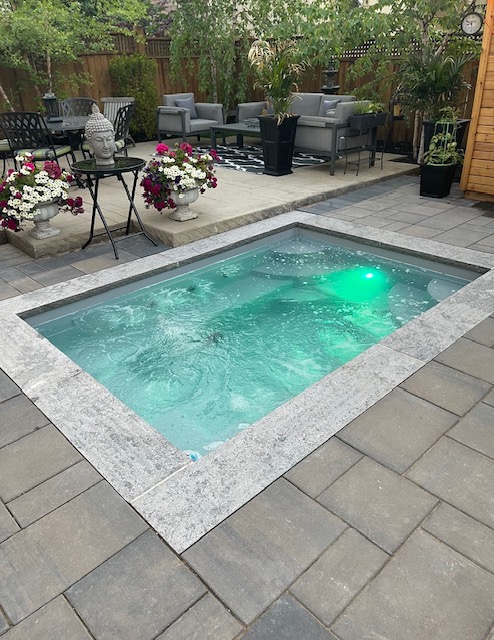
Modern inground spa designs are defined by minimalist geometry, flush integration with terraces, and a restrained materials palette that often pairs smooth fiberglass shells with concrete, polished stone, or composite decking. The result is a streamlined aesthetic where the spa reads as an architectural element rather than a separate object, facilitating visual continuity with patios and interior spaces. Lighting strategies—linear LED insets, concealed uplighting, and color-changing fixtures—accentuate clean edges and create dynamic evening scenes. These design choices require careful coordination of plumbing and electrical routing to preserve the minimalist appearance while supporting advanced controls.
How Do Traditional Inground Hot Tub Designs Create Timeless Appeal?
Traditional inground hot tub designs use warm, textured finishes such as natural stone, tile mosaics, and timber accents to anchor the spa within a cultivated landscape and produce a sense of permanence. Classic shapes, integrated seating niches, and grotto-like vaults encourage a cozy, intimate experience that reads as an extension of mature gardens or rustic architecture. Planting palettes favor evergreen and layered shrubs to provide privacy and seasonal interest, while materials are chosen to age gracefully and complement existing masonry. This approach balances therapeutic function with a design language that resists short-lived trends.
What Are Infinity Edge and Spillover Spa Concepts?
Infinity edge and spillover spa concepts create visual and acoustic drama by allowing water to flow over an edge into a lower catch basin or pool, producing uninterrupted sightlines and soothing overflow sounds. Mechanically, these concepts require coordinated circulation systems, precisely graded edges, and properly sized catch basins or troughs to manage water return and evaporation. Visually they excel where the spa overlooks a landscape or pool, offering a seamless water plane that enhances perceived luxury. Integrating spillover features with heating zones and shared filtration yields operational efficiencies while maintaining the intended cinematic effect.
For readers deciding between styles, the next section catalogues features and customizations that elevate a spa from functional to high-end, including water features, fire pairings, lighting, smart controls, and seating ergonomics.
Which Features and Customizations Elevate High-End Outdoor Hot Tubs?
High-end outdoor hot tubs distinguish themselves through layered sensory features, advanced controls, and bespoke seating that align hydrotherapy performance with luxury aesthetics. Water features like laminar jets and waterfalls add visual movement and acoustic depth, while integrated fire elements provide contrast and warmth for evening ambiance. Lighting systems—multi-zone LED with color scenes—deliver mood control and safety, and smart controls enable scheduling, remote monitoring, and energy optimization. Seating customizations, including therapist seats and loungers, tailor the spa to wellness goals and group use patterns. Below are practical feature lists and an EAV table to help teams prioritize upgrades.
This list outlines advanced water, lighting, and control features commonly used to elevate outdoor spas.
Spillover and Infinity Edges: Create visual continuity and soothing overflow sounds.
Laminar and Waterfall Features: Provide clean, sculptural water streams for focal interest.
Multi-zone LED Lighting: Offer dynamic scenes for mood and safety during night use.
These feature choices shape both user experience and mechanical complexity, so the table that follows compares typical options and their trade-offs.
Scene-setting, safety, power management considerations
Controls
Panel, smart app, preset scenes
Convenience, remote scheduling, energy optimization
This comparison highlights how selecting combinations of water features, lighting, and controls increases sensory value while also affecting maintenance and system design. Next we explore specific water features and when to choose each.
What Advanced Water Features Are Available for Luxury Spas?
Advanced water features for luxury spas include spillover edges, infinity rims, laminar jets, waterfall weirs, and gentle bubblers, each producing a unique sensory profile and technical demand. Spillover and infinity edges emphasize continuous water planes and pair well with pools for dramatic pool-spa combos, while laminar jets form crisp, arching streams ideal for modern aesthetics. Waterfalls and weirs add auditory masking and visual layering, supporting evening ambiance and noise management. Choosing features requires balancing desired effects against pump capacity, filtration routing, and seasonal maintenance needs to ensure reliable operation.
How Do Integrated Fire Features Enhance Backyard Hot Tub Ambiance?
Integrated fire features—such as raised fire bowls, linear burners, or fire-pit terraces—enhance ambiance by juxtaposing warm, flickering light with cool water reflections to create powerful sensory contrast. Placement matters: fire should be sited to frame sightlines without producing excessive heat toward users, and materials must be heat-resistant and noncombustible where necessary. Safety considerations include proper fuel selection, gas line routing or fuel containment, and distance from combustible landscaping; regular maintenance preserves performance and appearance. Thoughtful pairing of fire and water elements deepens nighttime usability and supports resort-style design narratives.
What Smart Controls and Custom Lighting Options Are Popular?
Smart spa controls commonly offer remote temperature scheduling, filtration timing, and lighting scene presets via dedicated apps or integrated home automation systems, improving convenience and energy management. Lighting options range from static white LEDs for safety to full RGB color systems that support dynamic sequences, synchronized with pumps or audio for immersive scenes. Compatibility decisions—whether to adopt open smart-home standards or manufacturer-specific ecosystems—affect future expansion and integration with thermostat controls or landscape lighting. Prioritizing intuitive user flows and fail-safe local controls ensures daily usability for all household members.
How Does Custom Seating Improve Comfort and Usability?
Custom seating optimizes comfort and therapeutic effect by arranging loungers, bench seats, and targeted therapist positions to match intended use cases—from solo relaxation to group socializing and focused hydrotherapy. Ergonomic seat contours, differing jet clusters, and depth variations influence how heat and jet pressure target muscle groups, so seating layout is fundamental to achieving intended wellness outcomes. Capacity planning balances seat count with personal space; overly dense seating can degrade comfort and jet effectiveness. Considering access and transfer points during seating design improves usability for all ages and mobility levels.
The next section examines why fiberglass is often the preferred material for luxury inground hot tubs, including a comparative EAV table that contrasts fiberglass with concrete and gunite.
Why Is Fiberglass the Preferred Material for Luxury Inground Hot Tubs?
Fiberglass is preferred for many luxury inground hot tubs because the material combines durability, smooth factory-finished surfaces, and rapid installation that reduce site disruption and long-term maintenance. Mechanically, fiberglass shells are molded as single pieces, minimizing seams and porosity compared to concrete or gunite finishes that require extensive curing and waterproofing. The specific homeowner benefit is a lower lifetime maintenance burden and more consistent finish options that support both modern and traditional design aesthetics. The table below compares fiberglass and common alternatives across key attributes relevant to luxury projects.
Material
Installation Time
Maintenance
Eco Impact
Fiberglass
Short; factory molded, quick site set
Low; non-porous surface, fewer chemicals
Lower waste from on-site materials
Concrete/Gunite
Long; requires formwork and curing
Higher; surface repair and sealing needed
Higher material and energy use on-site
Tile over Concrete
Longest; tile setting and grout maintenance
Medium-high; grout upkeep and repairs
Moderate; depends on tile sourcing
This comparison shows fiberglass delivers time savings and reduced maintenance burden for homeowners seeking a seamless finish and predictable lifecycle. The next subsections analyze technical comparisons, eco and maintenance benefits, and design flexibility, with references to illustrative product examples.
How Does Fiberglass Compare to Concrete and Gunite Spas?
Compared to concrete and gunite, fiberglass offers significantly shorter installation timelines because shells are preformed and require only excavation, base preparation, and mechanical hookups on site. Concrete and gunite constructions demand extensive formwork, curing time, and skilled finishing to achieve a smooth, watertight surface, which increases cost and schedule variability. Fiberglass also tends to require less ongoing maintenance—non-porous surfaces resist biofilm and staining—whereas concrete often needs periodic resurfacing and more aggressive chemical management. These trade-offs make fiberglass particularly attractive for homeowners prioritizing quick backyard transformation and predictable lifecycle costs.
What Makes Fiberglass Spas Eco-Friendly and Low Maintenance?
Fiberglass contributes to lower maintenance through a smooth gelcoat finish that resists algae adhesion and reduces the need for heavy chemical dosing, translating into fewer routine interventions and lower operating overhead. Material longevity reduces replacement cycles, and factory-controlled production can minimize waste compared with large on-site concrete pours that generate excess material and formwork. Additionally, efficient shells often require smaller pumps and optimized plumbing runs, which can yield modest energy savings over the spa’s operational life. These sustainability and maintenance attributes align with modern homeowner priorities for low-effort, durable outdoor amenities.
How Does Fiberglass Support Diverse Design Options?
Fiberglass supports diverse design options because molds can create varied contours, integrated seating ergonomics, and seamless openings that accept spillover edges and integrated features without complex onsite fabrication. Model variations illustrate form flexibility: sleek, modern shells can be produced alongside more classical shapes to satisfy divergent aesthetic goals. Fiberglass shells also integrate readily with custom cladding—stone, tile, or composite—so that finished installations match broader landscaping themes. Because molds can be reused across production runs, manufacturers can offer a wide selection of sizes and layouts that simplify model selection for specific site conditions.
For homeowners wanting model examples aligned with these benefits, Immerspa lists both modern and traditional fiberglass inground spa models—such as Azure for contemporary aesthetics and Zen for more classic proportions—illustrating how manufacturers match material advantages with design variety. This naturally leads to practical guidance on installation timelines and homeowner expectations.
How Does the Immerspa Installation Process Simplify Backyard Spa Setup?
Immerspa’s installation process streamlines backyard spa setup through clear, phased activities that reduce homeowner uncertainty and accelerate project completion. The approach emphasizes excavate-and-place workflows that leverage pre-molded fiberglass shells, minimizing on-site curing and finishing tasks associated with concrete builds. Typical phases include site preparation, foundation leveling, delivery and lowering, mechanical hookups, backfill and finish, and commissioning—each with predictable homeowner touchpoints. The table below summarizes those phases with typical durations and homeowner impacts to set expectations before contractors arrive.
Phase
Typical Duration
Homeowner Impact
Excavation & base prep
1–2 days
Noise and site access required; temporary landscape disruption
Delivery & lowering
1 day
Crane or lift access; temporary driveway or street use
Mechanical hookups
1–2 days
Electrical and plumbing work; brief service interruptions
Backfill & hardscape finish
1–3 days
Dust and equipment; landscaping restoration begins
Commissioning & handoff
1 day
System testing; user training and start-up
This clear phase map helps homeowners anticipate scheduling and prepare the property for each step, reducing surprises and aligning expectations with required permits or contractor coordination. The subsequent subsections break down phase details, typical timelines, and homeowner checklists.
What Are the Step-by-Step Phases of Installing an Immerspa Fiberglass Spa?
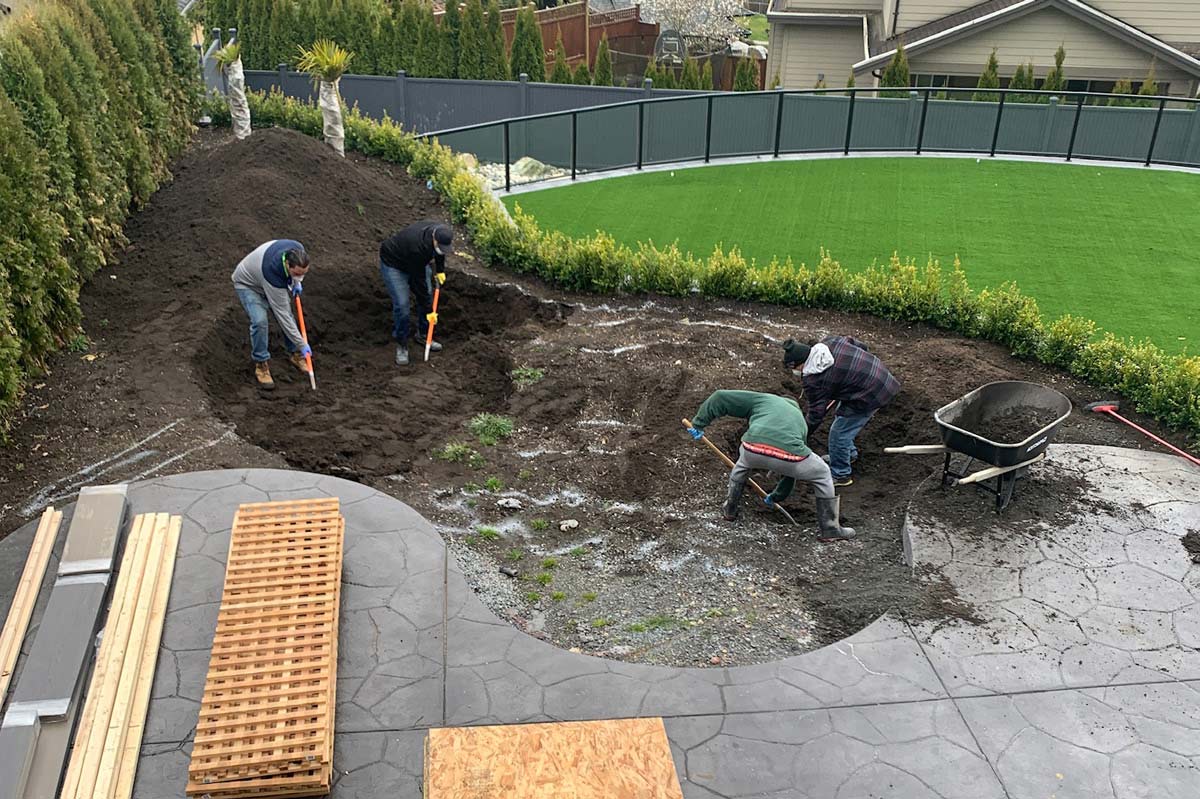
Installing a fiberglass spa follows logical steps that prioritize efficiency and homeowner communication: excavate and prepare a compacted base, deliver and lower the preformed shell into the pit, connect plumbing and electrical systems to manufacturer specifications, backfill and level while protecting mechanical access points, and finally fill, heat, and commission the spa. Homeowners are typically asked to ensure clear access for delivery vehicles and to confirm utility locations before work begins. Technicians perform operational checks and demonstrate controls during commissioning so the homeowner understands routine maintenance and smart features. Clear coordination during each phase minimizes delays and streamlines the move from construction to enjoyment.
How Long Does Installation Typically Take for Homeowners?
Typical installation for a fiberglass inground spa ranges from a few days for basic sites with easy access to one to two weeks for projects with complex hardscaping or integrated spillover features. Variables that lengthen timelines include restricted delivery access, custom cladding or tile work, permit processing, and adverse weather during exterior work. Conversely, simple backyard sites with prepped foundations and clear access can see completion in under a week from excavation to commissioning. Knowing these variables helps homeowners select appropriate project windows and coordinate landscaping or pool integration work.
What Should Homeowners Expect During Installation?
During installation homeowners should expect temporary site disruption—noise from excavation, presence of heavy equipment, and restricted access to portions of the yard—balanced by regular communication from contractors on daily progress. Safety measures include barricading open pits, controlling dust, and scheduling deliveries to minimize neighborhood impact; homeowners should secure pets and children accordingly. After installation, a commissioning checklist covers water chemistry stabilization, system settings, and routine maintenance training to ensure the spa performs as designed. Proactive planning around access and finish choices reduces stress and accelerates closeout.
For homeowners ready to move forward, a numbered installation checklist clarifies immediate actions and next steps.
Confirm access and utility locates: Ensure pathways for delivery equipment and known utility markings.
Prepare required permits: Verify local permitting needs and documentation with contractor.
Plan final cladding and landscaping: Decide on finishes so installation and hardscape scheduling align.
These steps help homeowners prepare for the installation workflow and minimize delays; next we examine integrating pools and spas for a cohesive backyard experience.
How Can You Integrate Pools and Spas for a Seamless Luxury Backyard Experience?
Integrating pools and spas creates visual continuity, operational efficiency, and expanded entertainment functionality by sharing sightlines, water features, and, where appropriate, circulation systems. Mechanically, integration can mean shared pumps, coordinated heating zones, and engineered overflow systems like spillover edges that allow water to move between spa and pool with controlled returns. Design-wise, terraces, steps, and aligned decking support ease of movement and sightline coherence so the combined elements read as a single resort-style composition. The following subsections cover the benefits, design elements, and how water and fire features work together to produce a cohesive backyard environment.
What Are the Benefits of Integrated Pool and Spa Designs?
Integrated pool and spa designs deliver several benefits: aesthetic unity that enhances perceived space, cost efficiencies through shared equipment and simplified plumbing runs, and expanded programming options that let users switch between heated spa comfort and cooler pool immersion. Shared systems can reduce redundancy in filtration and sanitation when designed by experienced contractors, while continuous sightlines improve supervision during gatherings and create a stronger visual focal point. These advantages make integrated designs especially attractive for homeowners seeking resort-style functionality without duplicative mechanical complexity.
Which Design Elements Create a Resort-Style Backyard with Pool-Spa Combos?
Resort-style pool-spa combos rely on elements such as spillover edges, tiered terraces, integrated fire features, and cohesive material palettes that guide sightlines and movement between spaces. Materials like stone coping, continuous decking, and synchronized lighting scenes tie the pool and spa together visually, while terraces or shallow tanning shelves provide layered experiences for different activities. Placement that orients both features toward attractive views or private landscaping enhances usability and relaxation. Coordinating these elements early in planning ensures mechanical and aesthetic systems work in harmony.
How Do Water and Fire Features Complement Pool and Spa Integration?
Water and fire features complement pool and spa integration by offering sensory layering—running water provides calming soundscapes while fire adds visual warmth and focus—resulting in a richer outdoor atmosphere for daytime and night use. Technical integration requires careful separation of fuel and water systems, appropriate clearances for heat, and coordinated control logic so lighting and ignition sequences act safely and deliberately. Designer attention to placement ensures that fire features frame the pool-spa composition without interfering with wind patterns or safety zones. Properly integrated, these elements elevate the backyard into a multi-sensory retreat.
The next section offers a practical checklist of planning considerations for custom spa projects, including sizing, landscaping, smart integration, and budget drivers.
What Are the Top Considerations When Planning a Custom Backyard Hot Tub?
Planning a custom backyard hot tub begins with practical decisions about size and capacity, proceeds through landscape and privacy strategies, incorporates smart controls for convenience and energy management, and concludes with budgeting that balances product selection with installation and finish choices. Size and seating determine therapeutic outcomes and social use, while privacy and lighting shape daily usability and ambiance. Smart home integration can automate temperature schedules and filtration timing to optimize energy use, and budget planning clarifies priorities across shell selection, hardscape, and features. The subsections below provide rules of thumb and actionable tips for each core consideration.
How Do You Choose the Right Size and Capacity for Your Inground Spa?
Choose spa size by mapping primary usage scenarios—daily therapeutic use for one or two people, regular entertaining for four to six, or larger group gatherings—then align seat count and ergonomics to those patterns. Rules of thumb include allowing at least one professional therapist seat for hydrotherapy-focused buyers and spacing seats to permit comfortable shoulder room for social use. Site constraints such as setback requirements and sightlines influence maximum dimensions, and deeper shells often increase heating demands. Early sizing decisions inform plumbing layout and selection of compatible models.
What Landscaping and Privacy Features Enhance Your Backyard Spa?
Privacy-enhancing landscaping employs layered plantings, evergreen screens, and architectural elements such as pergolas or louvered walls to create sheltered micro-environments that buffer wind and view lines. Hardscape choices—raised planters, retaining walls, and integrated seating—frame the spa and create stable sightlines for both day and night use. Lighting and pathway planning knit the spa into a larger circulation pattern, improving safety and nocturnal ambiance. Choosing resilient plant palettes and low-maintenance materials reduces ongoing upkeep and preserves the intended privacy effect.
How Can Smart Home Integration Improve Your Luxury Hot Tub Experience?
Smart home integration improves the spa experience by enabling remote scheduling, automated heating and filtration cycles, and scene-based lighting tied to routines or presence sensors. Entity → relationship → entity constructs illustrate this: smart control systems [entity] enable [relationship] scheduled heating [entity], which reduces energy use while ensuring the spa is ready when desired. Integration choices should prioritize open protocols or well-documented APIs when future expansion is likely, and installers must plan safe electrical and network routing to protect system reliability. Thoughtful automation simplifies daily ownership and supports energy-conscious operation.
What Budget Factors Influence Luxury Inground Hot Tub Projects?
Primary budget drivers include product selection (basic shell vs premium models), site preparation complexity, custom finishes (stone cladding, tile work), landscaping, and labor for mechanical integrations, with permit costs and unexpected soil conditions adding potential contingencies. Prioritizing features—such as whether to invest early in smart controls or high-end water features—helps manage scope while preserving key wellness outcomes. When appropriate, staged implementations let homeowners add premium finishes over time without delaying core spa installation. For homeowners seeking price guidance or model options, exploring fiberglass inground spas and full-size fiberglass swimming pools from established manufacturers can clarify cost-to-feature trade-offs and next steps.
For those ready to explore models or pricing, Immerspa’s range of fiberglass inground spas and hot tubs and their full-size fiberglass swimming pools illustrate combinations of fast installation, multiple designs, and lifetime warranty coverage that support staged or turnkey backyard transformations.
Decide primary use: Therapy, entertaining, or visual impact.
Prioritize features: Jets and seating for therapy, or water/fire features for ambiance.
Allocate budget: Product selection, site prep, and finishes in descending order of importance.
These prioritization steps streamline decision-making and lead naturally to procurement and contractor conversations.
Luxury Inground Hot Tub Concepts for Your Backyard Oasis: Design, Features, and Benefits
This article has covered the core concepts, design styles, feature sets, material comparisons, installation phases, and planning considerations needed to create a luxury inground hot tub and integrate it with broader backyard designs. The structured EAV tables, step lists, and semantic explanations above provide a practical toolkit for homeowners and designers to evaluate options, compare materials like fiberglass and concrete, and plan installation phases with predictable timelines. For homeowners seeking specific product matchups, fiberglass inground spas and hot tubs—available in modern models like Azure and traditional options like Zen—offer a blend of design flexibility, easy installation, and warranty protections that support creating a year-round private paradise. If you are ready to move forward, request pricing, model details, or dealer support to align product selection with your site and design priorities.


 No products in the cart.